
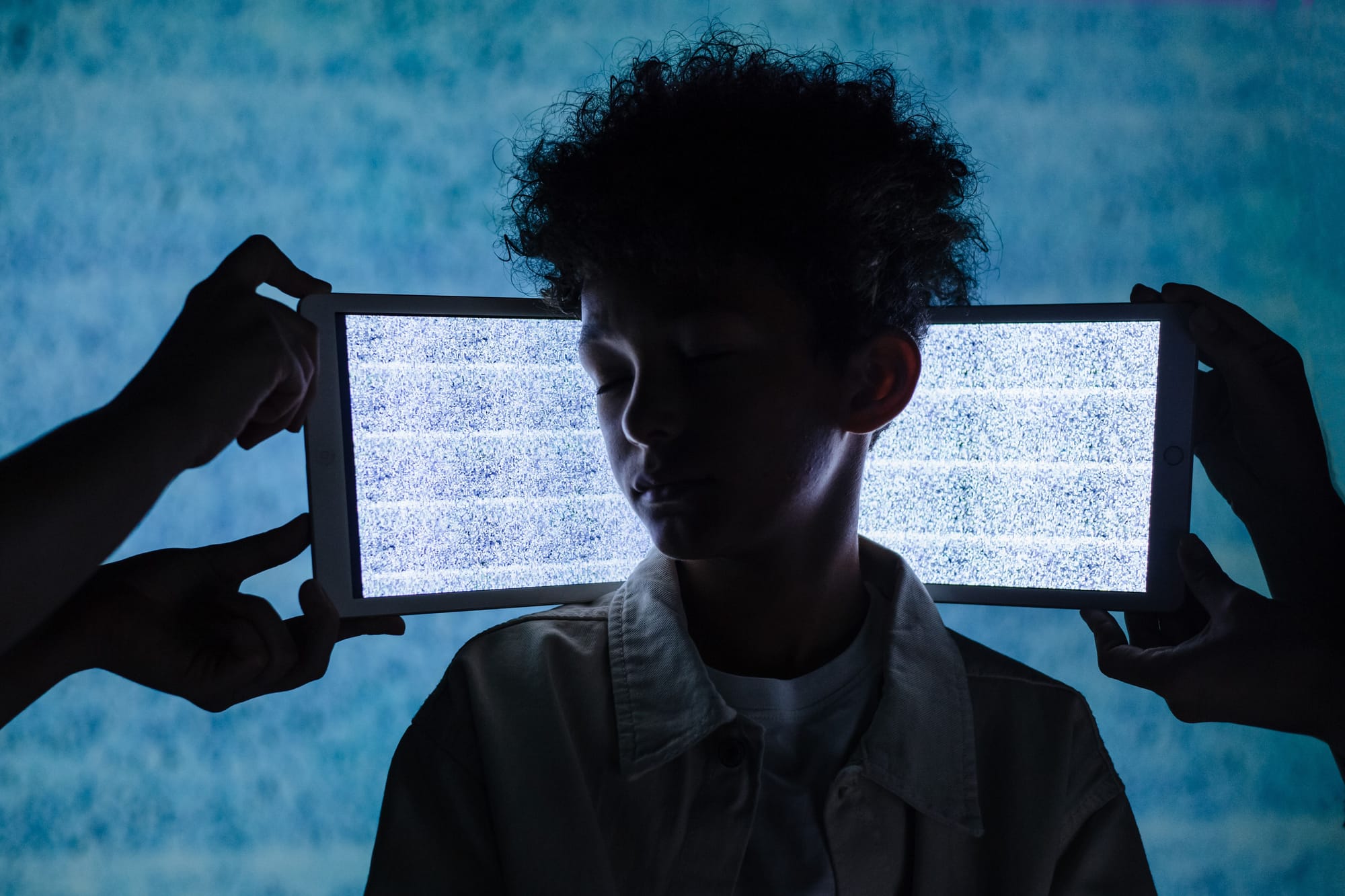
The Screen Time Debate Is Missing the Point
Why Schools Must Stop Measuring Minutes and Start Measuring Meaning
Few topics in education generate as much passion right now as screen time.
Parents worry about it.
Teachers debate it.
School boards argue about it.
Legislators propose restrictions on it.
News headlines routinely warn us about its dangers.
And while many of those concerns are valid, the conversation has become increasingly unbalanced.
In our urgency to protect young people from the potential harms of technology, we have begun treating all screen time as if it is the same.
It is not.
A student mindlessly scrolling social media for three hours is not engaging in the same activity as a student designing a prototype, collaborating with peers across the world, analyzing data, creating multimedia content, coding a solution, or researching a career pathway.
Yet much of the public conversation lumps these experiences together.
As a result, we risk overvaluing the harms while undervaluing the benefits.
More importantly, we risk preparing students for a world that no longer exists.
The Wrong Question
For years, educators and parents have asked:
"How much screen time is too much?"
It is a reasonable question.
But it may no longer be the most important one.
A better question is:
"What are students doing with that screen time?"
Because the educational value of technology is not determined by the device itself.
It is determined by the purpose behind its use.
A pencil can be used to write a great novel or draw meaningless doodles.
A library can be used to conduct research or simply pass the time.
Likewise, technology can distract or empower.
The tool is rarely the issue.
The experience is.
The Reality of the Modern Workforce
The irony of the current debate is that the same adults expressing concern about students using technology often spend their own workdays immersed in it.
Doctors use digital diagnostic tools.
Engineers use computer modeling.
Manufacturers rely on automation and data analytics.
Architects design digitally.
Journalists publish online.
Business leaders collaborate through virtual platforms.
Even skilled trades increasingly depend upon digital systems, software, and connected technologies.
The modern economy is not becoming less digital.
It is becoming more digital.
Schools therefore face an important challenge.
We must protect students from unhealthy technology use without isolating them from the digital realities they will encounter throughout adulthood.
Preparing students for tomorrow cannot involve pretending technology does not exist today.
The Hidden Opportunity
When used thoughtfully, technology creates opportunities that previous generations could only imagine.
Students can communicate with experts across the globe.
They can access information once reserved for universities and research institutions.
They can create professional-quality products, videos, podcasts, designs, and presentations.
They can explore careers before graduation.
They can simulate scientific experiments.
They can analyze real-world problems using authentic data.
Most importantly, they can create rather than simply consume.
That distinction matters.
The greatest danger may not be that students spend time on screens.
The greatest danger may be that too many students spend time consuming rather than producing.
Passive consumption often diminishes learning.
Active creation often amplifies it.
Schools should focus less on eliminating screens and more on transforming how screens are used.
The Deeper Learning Connection
This is where deeper learning becomes essential.
Technology alone does not improve learning.
In fact, technology without purpose often magnifies poor instructional practices.
A worksheet on a screen remains a worksheet.
A multiple-choice quiz delivered digitally remains a multiple-choice quiz.
Simply replacing paper with pixels changes very little.
However, when technology supports deeper learning, everything changes.
Students investigate authentic challenges.
They collaborate with others.
They communicate their thinking.
They create meaningful products.
They solve problems that matter beyond the classroom.
Technology becomes a bridge rather than a destination.
The goal is not more screen time.
The goal is more meaningful learning.
Career-Connected Learning Changes the Conversation
Career-connected learning offers another lens through which to view the debate.
Across industries, technology is becoming foundational knowledge.
Students interested in healthcare, advanced manufacturing, engineering, business, communications, agriculture, information technology, and countless other fields must understand how digital tools support professional work.
The question is no longer whether students will use technology in their careers.
The question is whether schools will teach them to use it responsibly, ethically, and effectively.
Career-connected learning allows students to see technology as a tool for solving real problems rather than merely consuming content.
That shift changes everything.
Students begin asking:
How can I use technology to design?
To innovate?
To communicate?
To improve lives?
To strengthen communities?
Those are very different questions than:
"What video should I watch next?"
What Schools Should Do Instead
Rather than measuring success by reducing screen exposure alone, schools should pursue a more balanced strategy.
Teach Digital Wellness
Students need explicit instruction about healthy technology habits, attention management, digital citizenship, and online well-being.
Prioritize Creation Over Consumption
Technology should be used to build, design, produce, investigate, and communicate more often than it is used to passively consume information.
Connect Technology to Real Problems
The most powerful learning experiences occur when students use technology to solve authentic challenges connected to their communities and future careers.
Preserve Human Interaction
Technology should enhance relationships, not replace them.
Discussion, collaboration, mentorship, and connection remain central to great teaching.
Measure Learning, Not Minutes
Schools should focus on outcomes, engagement, creativity, problem-solving, and student growth rather than relying solely on screen-time totals.
Finding Balance
The screen time debate often forces people into opposing camps.
One side views technology as harmful.
The other views technology as inevitable.
The truth is more nuanced.
Technology is neither the hero nor the villain.
It is simply a tool.
The real challenge is ensuring students learn to use that tool wisely.
As educators, our responsibility is not to shield students from every screen.
Nor is it to embrace every new device or platform without question.
Our responsibility is to create learning experiences that help students become thoughtful thinkers, skilled problem-solvers, responsible citizens, and adaptable professionals.
That work requires balance.
It requires intentionality.
And it requires us to stop asking whether screens belong in education and start asking whether we are using them in ways that truly prepare students for the future.
Because the future our students will inherit will not be screen-free.
The question is whether they will be ready for it.

Bring career-connected learning to your district
See how Defined fits into your roadmap — we’ll tailor the walkthrough to your grade bands, priorities, and timeline.