
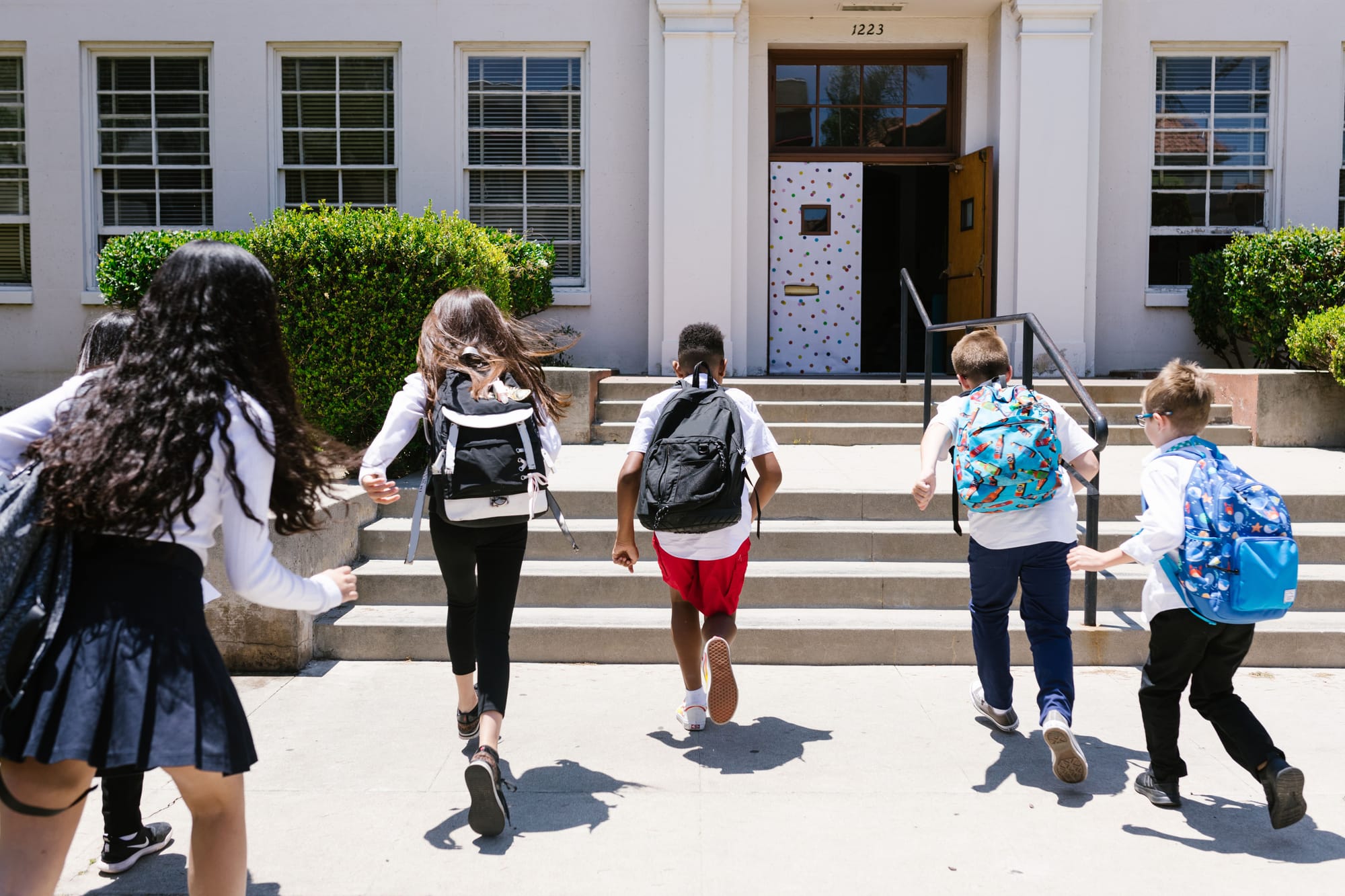
The First 30 Days Matter: Don’t Let the Urgency of Opening School Crowd Out the Purpose of School
Every school year begins with urgency.
Schedules must be finalized. Vacancies must be filled. Classrooms must be prepared. Buses must run on time. Devices must work. Students must be enrolled, welcomed, fed, supported, and safely transported home.
These responsibilities matter greatly. A successful opening requires extraordinary planning, coordination, and leadership.
But amid the intense effort required to open school, we cannot lose sight of why we are opening it.
A school can have every bus arrive on time, every classroom staffed, and every schedule completed—and still fail to provide students with the kind of learning they need.
The deeper question is not simply whether schools are ready for students.
It is whether the learning is ready for them.
Will students enter classrooms where they are immediately invited to think, question, create, collaborate, and solve meaningful problems? Will they understand how their learning connects to their interests, communities, and possible futures? Will they see themselves as active participants in their education—or quickly return to the familiar role of completing assignments, memorizing information, and waiting for adults to tell them what matters?
Opening school is an operational achievement.
Opening students’ minds to possibility is the real mission.
The First 30 Days Establish What Matters
The opening weeks of school are not merely a transition period. They are a powerful opportunity to establish expectations, relationships, habits, and beliefs that will influence the rest of the year.
Students quickly learn what a classroom values.
They notice whether their questions are welcomed. They recognize whether assignments require genuine thinking or simple compliance. They discover whether collaboration is meaningful or merely encouraged in theory. They determine whether school is a place where their identities, experiences, and aspirations matter.
Teachers are also reading the signals around them.
They notice which priorities receive attention from school leaders. They see what is discussed during meetings, what is visible during classroom visits, what receives coaching support, and what is quietly displaced when the school year becomes busy.
Many schools begin the year with ambitious plans for deeper learning, project-based learning, career-connected learning, student agency, and authentic assessment. These priorities may have been emphasized during strategic planning sessions or summer professional learning.
Then the year begins.
Immediate challenges emerge. Meetings multiply. Compliance demands grow. Assessment windows approach. Familiar routines return. By October, the transformative work that once felt urgent has become something the school intends to revisit “once things settle down.”
But schools rarely settle down.
If deeper and more meaningful learning is postponed during the first month, it can quickly become an aspiration rather than an actual student experience.
Transformation cannot be treated as something that begins after the “real work” of opening school is complete. It is the real work.
Begin With Meaningful Learning
There is a natural temptation to use the opening weeks primarily for reviewing rules, procedures, prerequisite skills, and classroom expectations. Students certainly need structure and a sense of belonging. But structure and meaningful learning are not competing priorities.
In fact, students often develop stronger classroom habits when those habits are established through purposeful work.
Collaboration becomes more meaningful when students must work together to address a genuine challenge. Communication skills develop when students have something important to explain. Persistence grows when learners are engaged in work they find relevant. Classroom community strengthens when students see that their ideas and contributions matter.
Students should not have to wait until later in the semester to encounter work that feels important.
From the first days of school, they should be invited to investigate compelling questions, explore real-world issues, create products for authentic audiences, and connect academic content to the world around them.
This does not mean every teacher must launch an elaborate, multiweek project on the first day. It means the opening student experience should signal that learning in this classroom will require curiosity, thinking, contribution, and purpose.
The message should be unmistakable:
You are not here simply to complete schoolwork. You are here to use what you learn to understand and influence the world.
Connect Learning to Life Beyond School
Career-connected learning is sometimes treated as a separate initiative—something reserved for high school students, career and technical education programs, internships, or occasional career days.
That definition is far too narrow.
Career-connected learning begins whenever students understand that the knowledge and skills they are developing have value beyond the classroom.
A young student investigating how a community uses water is beginning to understand the work of environmental scientists, engineers, public officials, and conservationists. A middle school student designing a solution to a local transportation problem is applying mathematics, research, communication, and systems thinking. A high school student developing a public health campaign is connecting science, writing, design, and civic responsibility.
These experiences do more than expose students to occupations. They help students develop the durable skills that matter across careers and throughout life: problem-solving, collaboration, communication, adaptability, creativity, and critical thinking.
They also expand students’ sense of what is possible.
Too many young people encounter potential careers only by accident—through a family member, a chance conversation, or an experience available to some students but not others. Schools can make that exposure intentional and equitable.
Career-connected learning should therefore be visible across grades, subjects, and student experiences from the beginning of the year. Students should regularly meet professionals, examine real workplace challenges, use industry-relevant tools, and understand how academic concepts are applied in authentic settings.
When students can answer, “Why am I learning this?” and “Where might this take me?” engagement becomes more than a strategy. It becomes a natural response to learning that has meaning.
Protect Instructional Priorities
Every district and school has more priorities than time.
The challenge is not usually a lack of worthy ideas. It is the absence of disciplined choices about which ideas will receive sustained attention.
Leaders may say that deeper learning, student agency, and career readiness are priorities. But teachers will judge their true importance by what leaders consistently protect.
Does the master schedule provide time for collaboration and interdisciplinary planning?
Do professional learning sessions help teachers design and facilitate authentic learning experiences?
Do classroom observations examine the quality of student thinking—or primarily focus on teacher actions and procedural compliance?
Are teachers given practical resources, coaching, and feedback?
Are successful examples identified, studied, and shared?
When operational pressures arise, what gets removed from the agenda first?
A priority that disappears whenever the organization becomes busy is not truly a priority.
School and district leaders must actively guard meaningful learning against the gravitational pull of familiar practice. That requires more than inspirational language. It requires clear expectations, aligned resources, time, accountability, and ongoing support.
It also requires restraint.
If leaders want teachers to implement deeper learning well, they must be willing to reduce competing demands that fragment attention and exhaust capacity. Coherence is not created by adding one more initiative. It is created by connecting the work, clarifying what matters most, and giving educators the conditions to do it well.
Give Teachers Practical Support
Teachers are much more likely to embrace ambitious instructional expectations when they can see how to translate them into daily practice.
Having vision is crucial, but vision alone is insufficient.
Educators need access to high-quality, standards-aligned learning experiences that connect academic content to authentic problems. They need examples of strong projects, student products, formative assessments, and career connections. They need planning time to adapt resources to their students and local context.
They also need coaching that is developmental rather than performative.
Teachers should have safe opportunities to try new approaches, study student responses, receive feedback, make adjustments, and improve. Early implementation may not be perfect—and leaders should not expect it to be. Meaningful instructional change requires learning from adults as well as students.
The goal is not to hand teachers another program and ask them to implement it with fidelity. The goal is to build their confidence and capacity to create learning environments in which students consistently engage in authentic, intellectually demanding work.
That development takes time. But it should begin immediately.
If teachers spend the first months reinforcing conventional instructional patterns, shifting those patterns later becomes significantly more difficult. The first 30 days should therefore include intentional support for the instructional experience schools hope to sustain throughout the year.
Measure What Students Actually Experience
During the opening of school, leaders understandably monitor attendance, enrollment, staffing, transportation, discipline, and assessment data.
But those measures do not tell us enough about learning.
If we are serious about deeper and career-connected learning, we must also examine the student experience.
Leaders should ask:
- Are students doing most of the thinking, or are they primarily receiving information?
- Are they asking questions and making meaningful decisions?
- Are they collaborating to produce something they could not create alone?
- Are they applying academic knowledge to authentic problems?
- Are they receiving feedback and revising their work?
- Do they understand how their learning connects to life, community, and future opportunities?
- Can they explain why their work matters?
These questions should guide classroom observations, student conversations, teacher collaboration, and leadership meetings.
Schools should also ask students directly.
What are you learning? Why is it important? When have you felt most challenged? Where have you had an opportunity to create, contribute, or solve a problem? How does your learning connect to something beyond school?
Student responses can reveal the distance between an instructional vision and the reality of the classroom. They can also help schools identify promising practices worth expanding.
We cannot improve the student experience if we measure everything except the experience itself.
Turning Vision Into Daily Practice
At Defined, we believe students deserve learning that is relevant, rigorous, and connected to the possibilities ahead of them.
Through high-quality project-based learning, career-connected content, professional learning, and implementation support, Defined helps schools and districts move from broad aspirations to meaningful classroom experiences.
The goal is not project-based learning for its own sake. The goal is to help students develop academic knowledge, durable skills, confidence, and a clearer understanding of how they can contribute to the world.
That work is especially important as schools open.
The beginning of the year creates a rare window in which leaders and teachers can establish a different understanding of what school can be. Students arrive with questions, expectations, uncertainty, and hope. What they experience during those opening weeks will shape how they see themselves as learners for the months ahead.
We should not use that window to offer them more of the same while promising that meaningful learning will come later.
The Future Starts on the First Day
A smooth school opening is worth celebrating. It reflects tremendous work by educators, administrators, support staff, families, and community partners.
But a smooth opening is not the final measure of success.
The true test is what happens after students enter the building.
Do they encounter learning that awakens curiosity?
Do they see connections between the classroom and the wider world?
Do they have opportunities to think deeply, work collaboratively, and create something meaningful?
Do they begin to imagine futures they may not have considered before?
The first 30 days create the habits that can define the entire year. They show students and educators which commitments are real, which expectations will endure, and what kind of learning the school truly values.
If we want students to experience something different this year, we cannot begin by giving them more of the same.
The future of learning does not start after the school year settles down.
It starts on the first day.

Bring career-connected learning to your district
See how Defined fits into your roadmap — we’ll tailor the walkthrough to your grade bands, priorities, and timeline.