
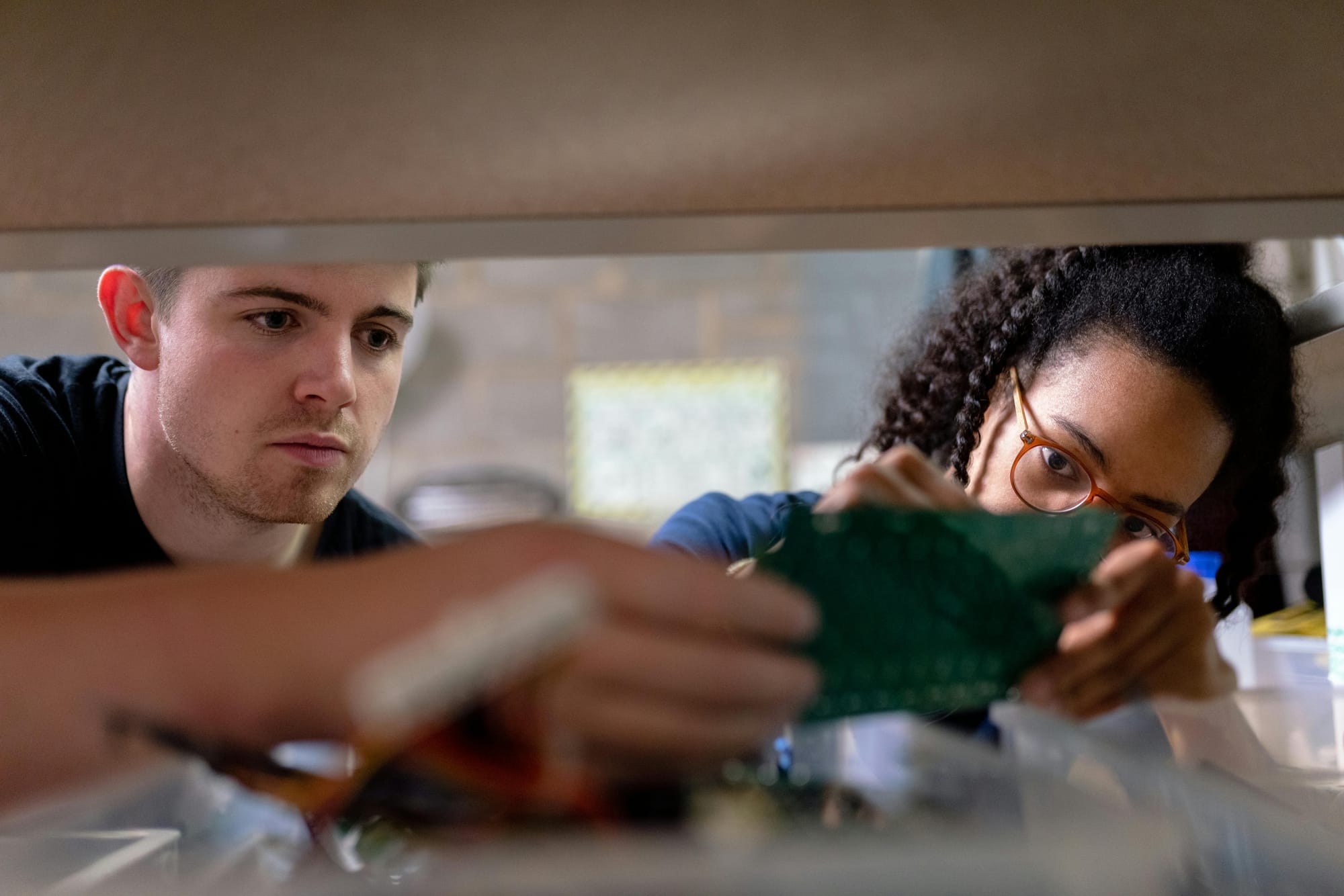
STEM is a Signal. Not a Subject.
There is a quiet but consequential question sitting beneath every STEM initiative in our schools—one we do not ask often enough:
Who do our students believe they are allowed to become?
We have made progress in expanding access to STEM. More courses. More programs. More pathways. On paper, the opportunities are there. But access alone does not guarantee transformation. Exposure alone does not build belief. And belief—more than anything else—is what determines whether a student persists when the work becomes difficult.
If STEM is going to matter in the way we say it does, then it cannot simply be something students experience. It must become something they own.
Exposure Without Identity Is Fragile
Students can complete STEM assignments. They can participate in projects. They can even perform well on assessments. But if they do not see themselves in the work—if they do not internalize a sense of belonging in these spaces—then their connection to STEM remains conditional.
The moment the content becomes challenging…
The moment they encounter struggle…
The moment they feel out of place…
They disengage.
Not because they lack ability—but because they lack identity.
We have to be honest about this: many students experience STEM as something they visit, not something they inhabit.
Representation Matters—But It Is Not Enough
We often talk about representation as the solution. And it matters. Students should see engineers, scientists, and innovators who look like them, who share their stories, who reflect their communities.
But representation, by itself, is incomplete.
Students do not build identity simply by seeing. They build it by doing. By contributing. By being positioned as capable thinkers and problem solvers in real contexts.
It is one thing to say, “You can be an engineer.”
It is another to say, “You are doing the work of an engineer—right now.”
That distinction changes everything.
From Compliance to Contribution
Too often, STEM in schools is framed as a series of tasks to complete rather than problems to solve. Students move from assignment to assignment, measuring success by correctness rather than impact.
But the world they are preparing to enter demands and rewards contribution, not compliance.
Students must experience STEM not as isolated content, but as a tool for making sense of—and improving—the world around them.
When a student is asked to:
• Design a solution to a real community issue
• Analyze data that reflects authentic challenges
• Think through problems that professionals actually face
They begin to see themselves differently.
Not just as students.
But as contributors.
Career-Connected Learning Builds Identity
This is where the work becomes real.
When STEM learning is connected to careers and grounded in authentic challenges, students are no longer completing assignments—they are stepping into roles. They are thinking like professionals. They are making decisions that mirror the complexity of the real world.
This is not theoretical. It is transformational.
Through platforms like Defined, students engage in real-world performance tasks aligned to industry sectors. They are not passively receiving knowledge—they are applying it. They are exploring pathways. They are beginning to understand not only what they can do, but who they can become.
And that shift—from task completion to identity formation—is where persistence is born.
This Must Be Built by Design
STEM identity does not develop by accident.
It is the result of intentional design:
• Tasks that are relevant and meaningful
• Experiences that position students as capable
• Systems that connect learning to life beyond school
It requires adults who understand that their role is not just to deliver content, but to shape belief.
Because once a student begins to see themselves as “a STEM person,” their relationship with learning changes. Their willingness to persist changes. Their sense of possibility expands.
The Moral Imperative
If students leave our schools having experienced STEM but never having seen themselves in it, then we have not expanded opportunity—we have simply curated it.
And curation is not enough.
Our responsibility is not just to expose students to STEM. It is to ensure they can locate themselves within it.
To build systems where every student—not some, not most, but every student—can say:
“This is for me. I belong here. I can do this.”
That is the work.
And that is the standard.

Learn More About Career Connected Learning @ Defined
Discover how Defined Learning helps students build future-ready skills through project-based learning, STEM, and career exploration.